Share on facebook
Facebook
Share on twitter
Twitter
Share on linkedin
LinkedIn
Share on pinterest
Pinterest
Table of Contents
    Add a header to begin generating the table of contents
    Scroll to Top

    Did you know – Black women in the USA are at a higher risk of pregnancy related death?

    Information obtained from the  Centers for Disease Control and Prevention, for 2011 to 2014 shows that for every 100,000 births by black women there were 40 deaths. The statistics for pregnancy related death in Caucasian women were 12.4 and for women of other races it was 17.8. 

    In the United States, pregnancy related deaths keep going up. While this is alarming and saddening at the same time we would like to share some hope to black women all across the country. 

    There are a number of best practices that black mothers can employ as well as there are ways for incentivizing health systems.

    One best practice black women can utilize is hiring a doula.

    How a Doula Can Help

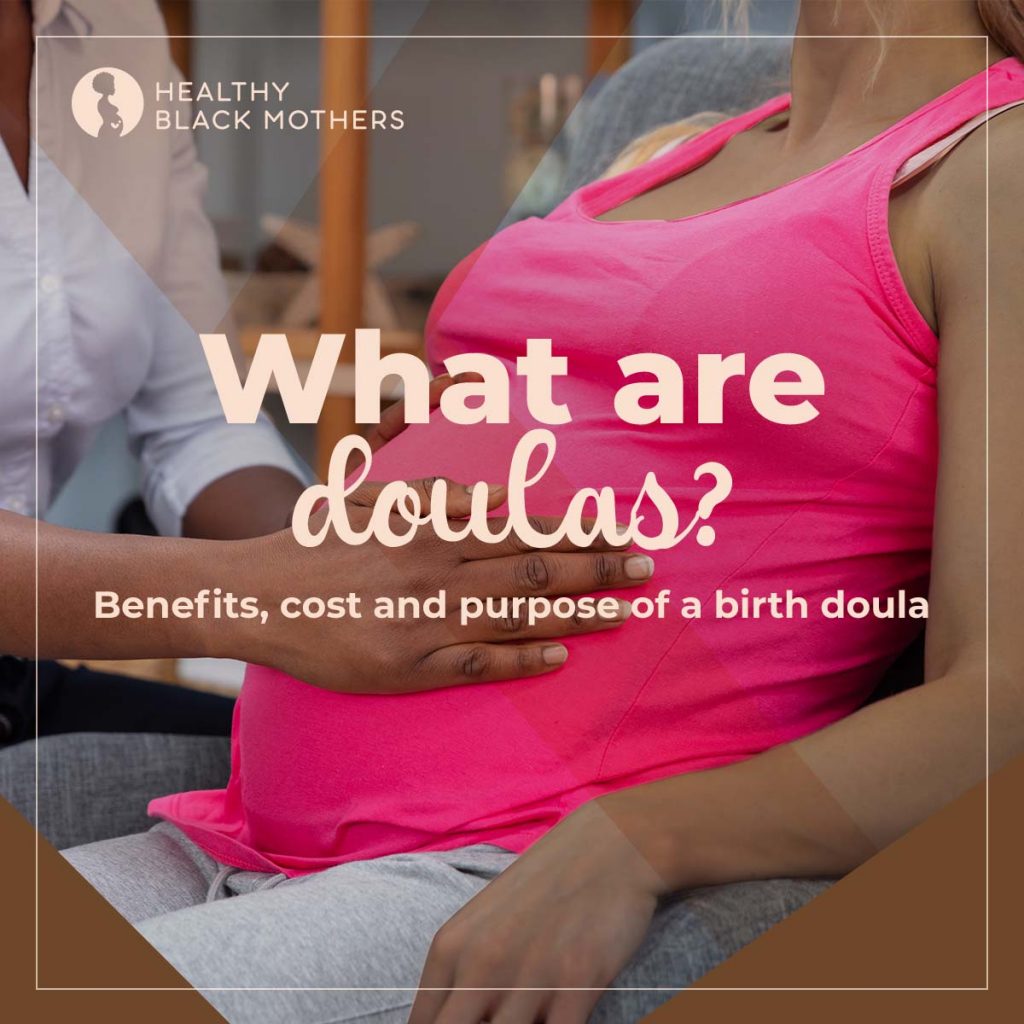
    The American Pregnancy Association, which promotes pregnancy wellness, describes a doula as a professional trained in childbirth who offers physical, educational, and emotional support to expectant mothers, those giving birth, or those who have already given birth.

    A doula’s main job is to help make the birthing experience memorable, safe, and empowering. They give support to the mother-to-be and also make the experience less challenging for the family.

    Today, we answer all the pressing questions mothers-to-be have about doulas.

    Is a Doula Important? What Are the Benefits of Having One?

    Yes, a doula is very important in the childbirth process.

    According to The Huffington Post, doulas can reduce the chances of having a c-section that’s not medically necessary. Having a doula present during childbirth can lower your odds of having a C-section by 60%.

    You can think of a doula as your labor companion. However, it is important to note that they don’t replace your partner or take their role. In fact, they help them by suggesting how they can support you – the laboring mom – in the way that’s best suited to them.

    The National Center for Biotechnology Information reports that studies examining the role of doulas have shown that there is a reduction in instrumental vaginal births, cesarean births, the length of labor, and the need for oxytocin augmentation when doulas are present

    Requests for epidural anesthesia are also drastically reduced when a doula is present. Why is this? Doulas use massage techniques to reduce the anxiety mothers experience during labor.

    How Does a Doula Help During Childbirth?

    The Mayo Clinic, which is focused on integrated clinical practice, says that a doula can be an essential part of the birthing experience. 

    As a labor support specialist, their job is to offer emotional and physical support to both you and your partner before childbirth, during childbirth, and afterwards.

    As part of their job, they:

    • Offer physical comfort through massage, touch, and breathing techniques
    • Provide encouragement and emotional reassurance
    • Keep you informed about what’s happening during labor
    • Enhance communication between you and hospital staff

    A Doula and a Nurse: What’s the Difference?

    As we had earlier mentioned, a doula only provides emotional, physical, and informational support, before, during, and after childbirth. And while doulas can be certified, they are not medical professionals and don’t perform medical procedures or deliver babies.

    A labor and delivery nurse, on the other hand, is licensed to offer medical care to women in labor, those with labor complications, and those who have recently delivered. A nurse works with a doctor to create a plan that helps with the delivery of healthy babies.

    Is There a Difference Between a Doula and a Midwife?

    The Bump, a pregnancy and parenting resource for parents, describes doulas and midwives as certified professionals who help expecting mothers during labor. But that’s where their similarities end.

    A midwife is a healthcare provider licensed to deliver babies in homes, birthing centers, or even hospitals. A doula (a childbirth coach) provides support during labor and in the first few weeks after childbirth. They don’t replace a midwife. 

    I Heard That a Doula Can Deliver a Baby, Is This True?

    No, a doula is not medically trained and can’t deliver a baby.

    According to Healthline, a doula is like a BFF; they soothe your fears and help you to get through labor. But they do not replace a doctor, a nurse, or a midwife. 

    The word doula is derived from the Greek word doúlos which means a woman’s servant or caregiver. A doula comforts the mom-to-be, reassures, and guides her.

    Are All Doulas Certified?

    No, not all doulas are certified. But we recommend that you hire a certified doula as they have the knowledge needed to support you through the birthing experience.

    There are different organizations that provide certification for doulas. The major ones include:

    • DONA International 
    • toLabor
    • Childbirth and Postpartum Association 
    • International Childbirth Education Association 

    Some doulas go for longer training than others. For example, labor and delivery nurses who want to become doulas only need to learn labor support skills as they already have a lot of experience in observing births.

    Do I Really Need a Doula?

    Do you want an easier, more peaceful birthing experience? If you answered “yes,” then you need a doula.

    Authors and physicians Marshall Klaus, Phyllis Klaus, and John Kennell wrote in their book about doulas that the massages doulas give help stimulate the feel-good hormone oxytocin.

    And science proves them right. 

    When your bloodstream has a high level of oxytocin – which is produced in the hypothalamus and secreted by the pituitary gland – you experience uterine contractions and a calming feeling that helps reduce labor pain.

    If you’re still unsure whether you need a doula, this video may help you to make up your mind.

    It shows a certified doula and a childbirth educator demonstrating positions and massage techniques that help relieve labor pain. The massages are simple yet effective – very soothing to the mother-to-be.

    Can You List the Things a Doula Doesn’t Do?

    These are the tasks a doula doesn’t perform:

    • Deliver babies
    • Provide medical care
    • Perform medical tasks such as vaginal examination, blood pressure checks, or fetal heart checks 
    • Speak to medical staff about health care decisions – you and your partner do that. A doula encourages you to voice your concerns and opinions to your health care provider and also suggests options
    • Make decisions on your behalf

    Is It OK to Tip a Doula?

    Yes, it is.

    Some women tip doulas to show gratitude after a very long labor, after a short and painful labor, or when they go above and beyond the call of duty.

    And the tip doesn’t have to be monetary. It can be a gift card for a nice restaurant, a box of chocolates, a bouquet of flowers, or even a lovely card with a handwritten message.

    You can also spread the word about a doula’s good services.

    Is a Doula Insured?

    Some insurance companies cover doula care while others don’t. An insurer is likely to cover doula services if the doula is certified and has an NPI (National Provider Identifier) number.

    If you can’t afford to hire a doula, call the benefits department of your insurance company and get the details. Some companies require you to pay the doula, get a receipt, and submit a claim for reimbursement.

    The Takeaway

    Childbirth is a challenging and overwhelming experience. To get through, you need emotional, physical, and educational support.

    That’s what a doula provides.

    If you’re worried about going through the experience of childbirth, don’t be. Just make sure you have a certified doula in the delivery room. They will make a great labor companion during the process. 

    Remember, you don’t have to hire a doula to give you support during childbirth, but it’s an option worth considering. Decide if you need one today.

    Cris
    Author: Cris

    Leave a Comment

    Your email address will not be published. Required fields are marked *

    Scroll to Top